Boost Pardot Email Deliverability in 5 Simple Steps
Improve Pardot email deliverability with expert tips to boost inbox placement, protect sender reputation, and drive real prospect engagement.

Your Pardot (Marketing Cloud Account Engagement) email is only as effective as its ability to land in a prospect’s inbox – and not their spam folder. Whether you’re launching a campaign to 500 or 50,000 prospects, ensuring your email deliverability is solid is key to driving real engagement.
In this article, we break down five practical steps to improve email deliverability in Account Engagement, so every email you send works harder for your marketing goals.
- Verify and warm up your sending domain: email providers judge the reputation of the sender’s domain.
- Clean your mailable list: drop generic addresses like info@ and contacts without activity for six months or more.
- Send to smaller, highly engaged segments instead of your whole database.
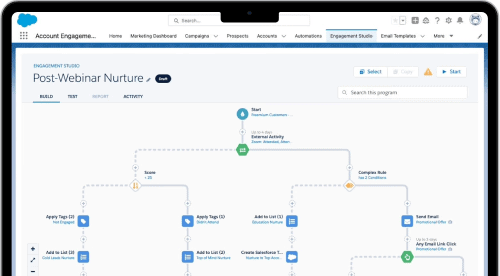
- Test every Engagement Studio path with realistic test personas before you launch.
- Relevant, personalized content keeps recipients engaged, and engagement supports deliverability.
1. Verify and Warm Up Your Sending Domain
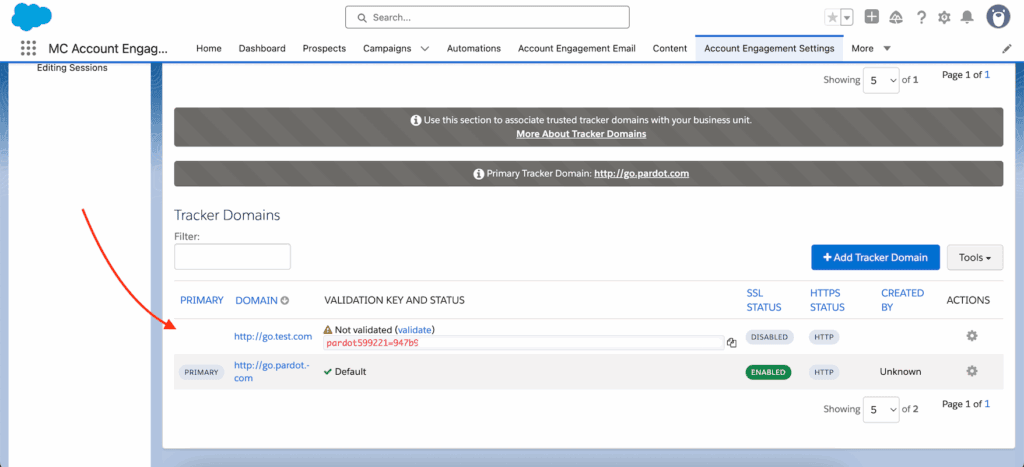
Your first move toward strong deliverability should always be domain authentication. Email providers pay close attention to the sender’s domain reputation, so if you haven’t yet verified your domain or set up authentication protocols, you’re flying blind.
Implement Domain Authentication
Configure these authentication standards to build trust with ESPs (Email Service Providers):
- SPF (Sender Policy Framework): Specifies authorized mail servers allowed to send email for your domain.
- DKIM (DomainKeys Identified Mail): Uses cryptographic authentication to ensure email integrity and authenticity.
- DMARC (Domain-based Message Authentication, Reporting, and Conformance): Builds on SPF and DKIM, enabling monitoring and enforcement of domain-level protection against spoofing.
Note: Pardot does not support DMARC configuration directly, so you’ll need help from your IT team or DNS hosting provider.
Consider a Dedicated IP Address
If you send more than 100,000 emails a month or work in sensitive industries like finance or government, a dedicated IP can isolate your sending reputation from other organizations. However, keep this in mind:
- Dedicated IPs require warming to avoid spam filters.
- The warm-up process means gradually increasing your sending volume over time.
- Most standard B2B marketers are fine using Pardot’s default shared IP setup.
2. Clean Up Your Mailable Prospect List
Just because an email address exists in your database doesn’t mean it should be emailed. The goal isn’t to hit send – it’s to ensure your message reaches and resonates with qualified, active prospects.
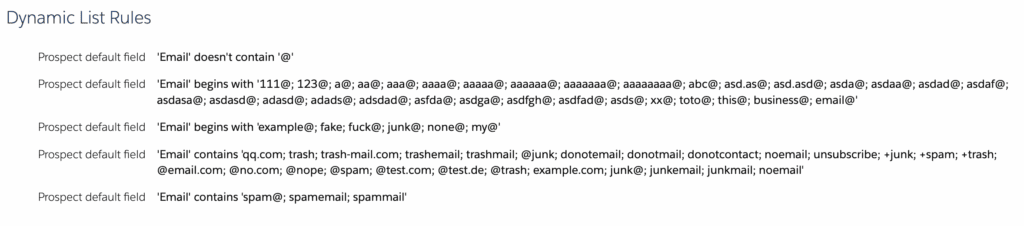
Remove High-Risk or Low-Value Emails
- Generic addresses like info@, support@, or sales@
- Stale contacts (no activity in 6+ months)
- Email addresses purchased from third-party sources
- Spam traps or obviously fake addresses
- Competitor emails (they’re not your target audience)
Inactive and irrelevant addresses drive up bounce rates and complaints, putting your sender reputation at risk. It’s better to have fewer qualified contacts than a bloated list of disengaged ones.
3. Use Small, Highly Engaged Lists
Sending to a massive list might make the metrics look exciting – but vanity can cost you. Focusing on highly engaged segments increases deliverability, click-through rates, and ultimately leads.
Segment Smartly
Build your recipient lists based on behavioral or demographic clues:
- Region or timezone
- Industry or company size
- Role-specific personas
- Past event attendance or product interest
Always Use Suppression Lists
Suppress people who:
- Have opted out or unsubscribed
- Have already received the campaign in a different segment
- Should be excluded due to sales conversations or pipeline status
Watch out for AMPSEA behavior: In Pardot orgs with AMPSEA (Allowing Multiple Prospects with the Same Email Address) enabled, suppression lists can be ignored if email logic isn’t properly designed. Cross-check recipient and suppression lists carefully and align your sales and marketing processes to ensure compliance.
4. Audit Your Email Automation Workflows
Even the most sophisticated Engagement Studio program can trip you up if it’s not bulletproof. Before launching, thoroughly test every path.
Test with Realistic Scenarios
- Use diverse test personas to simulate different behaviors
- Ensure conditional rules (opens, clicks, score changes) perform accurately
- Validate your email templates render correctly across devices – use bulletproof HTML buttons to ensure CTAs display in Outlook and Gmail
Think of it as quality control for your automations. A broken wait step or incorrect action can silently damage both deliverability and trust in your campaigns.
5. Focus on Value-Driven Content
High deliverability isn’t just about clean lists and configurations – it’s also about sending messages recipients actually want. Personalization and relevance are your strongest allies here.
Deliver Content Subscribers Want
- Tailor messaging to buyer stage or persona
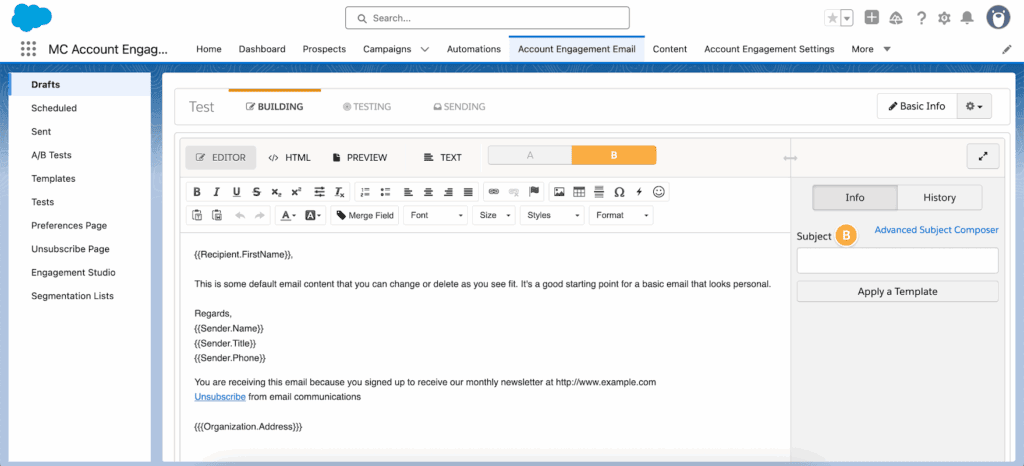
- Test subject lines, content formats, and imagery with A/B testing
- Use email preference centers to let users guide the type and frequency of content they want
- Stick to plain language – avoid spammy trigger words like “FREE”, “limited time”, and “exclusive offer”
And most importantly: don’t fear opt-outs. It’s better for disengaged users to unsubscribe than mark your mail as spam. Trim what isn’t working to protect what is.
Final Thoughts
Deliverability doesn’t happen by accident. It takes intentional setup, maintenance, and strategic thinking throughout the entire marketing lifecycle. From domain verification to suppression lists and value-based content, each step increases the likelihood that your message finds the inbox – and leads to a click, a conversation, or a deal.
If your team is ready to improve your Account Engagement performance and put better practices into action, get in touch with us today.