Pardot Email Deliverability and Compliance Guide
Learn how to improve Pardot email deliverability and stay compliant with privacy laws using 23 essential features and best practices.

Email deliverability and compliance are critical to any successful B2B marketing strategy. With Salesforce Pardot (Account Engagement), marketers gain access to robust tools that can help ensure your emails land in the right inbox – while also adhering to global privacy regulations and ethical data usage.
In this article, we’ll walk through 23 essential deliverability and compliance capabilities in Pardot, broken into three main areas: Account Settings and Domain Management, Prospect Opt-In & Preferences, and Form & Landing Page Settings.
- Many deliverability and compliance settings sit at account level and are managed by Pardot admins.
- The organization address feeds the {{{Organization.Address}}} merge field that your emails need.
- Respect consent: Pardot supports explicit opt-in, preference management and email compliance policies.
- Link your privacy policy wherever forms and landing pages collect data.
- Involve your legal and IT teams when you configure these settings.
Pardot Account Settings and Domain Management
Many settings related to email deliverability and compliance are managed at the account level by Pardot Admins. Getting these right ensures your infrastructure is secure, trusted, and optimized for marketing success.
1. Organization Address Field
This is the source for Pardot’s {{{Organization.Address}}} merge field, required for compliance with CAN-SPAM and similar regulations in other regions. Make sure this field is accurately populated to include your business’s physical address.
2. Cookie Duration Settings
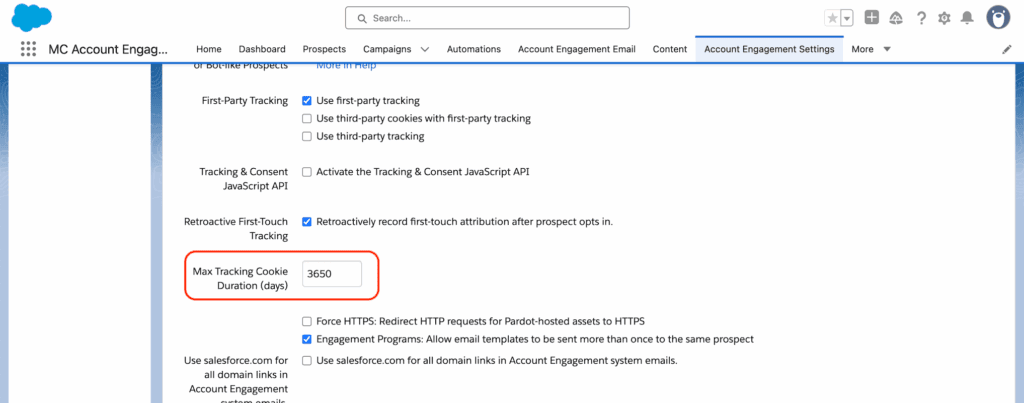
Pardot cookies help track visitor activity. Admins can adjust these from 180 to 3650 days to align with your organization’s privacy standards. Longer durations mean better prospect tracking – but be sure it aligns with your stated policies.
3. First-Party Tracking
Enable first-party cookies to retain tracking ability in a world where third-party cookies are being blocked. This ensures tracking persists while demonstrating ownership and responsibility over data collection.
4. Do Not Track Preferences
Respect browser “Do Not Track” settings by stopping Pardot from tracking specific user types who’ve opted out. This supports compliance with increasing consumer privacy expectations and legal requirements.
5. Tracker Domains
Use branded tracker domains to replace generic go.pardot.com links. This builds trust with your audience and allows SSL security configuration, improving both brand perception and email reputation.
6. Force HTTPS
Forcing HTTPS ensures all Pardot-hosted assets are served over a secure connection. This not only provides user trust but also affects SEO rankings and prevents browser security warnings.
7. Tracking Opt-In Banner
You can request explicit tracking consent using a customizable banner. This is especially important for organizations operating in or targeting GDPR-compliant regions.
8. DKIM & SPF Authentication
Implement these email authentication protocols to verify your sending domain and protect your brand from spoofing. Correct setup significantly improves inbox placement rates.
| Authentication Method | Purpose |
|---|---|
| SPF | Verifies sending servers are authorized for your domain |
| DKIM | Cryptographically signs emails to confirm authenticity |
Prospect Opt-In and Email Preferences
Respecting your prospects’ choices is key, both from a legal and ethical standpoint. This section outlines how Pardot supports explicit consent, preference management, and email policy compliance.
9. BCC Email Compliance
This feature adds a blind carbon copy of outgoing emails to a designated inbox for regulatory archiving. It’s particularly valuable in industries with strict communication documentation requirements.
10. Operational Email Sending
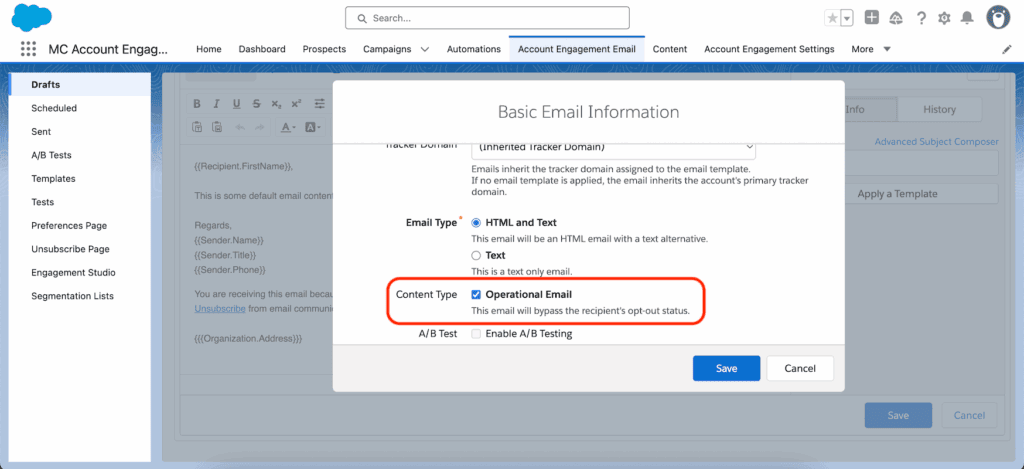
Operational emails bypass opt-in preferences. Use this type for transactional or critical service communications – but avoid misusing it for marketing content.
11. Prospect Deletion Policies
Create a clear system for deleting prospect records, whether soft-deleting (via Recycle Bin) or permanently removing them to meet data deletion requests or maintain a clean CRM.
12. Manual and Automated Opt-Out
Ensure prospects can unsubscribe easily – and honor those requests promptly. Automation rules can simplify this while reducing risk of oversight.
13. Confirmed Opt-In Process
Also known as double opt-in, this process helps verify a prospect’s interest and ownership of the email address. It improves list quality and protects against bot signups or mistyped emails.
14. Email Preference Center
Allow subscribers to choose what types of emails they want to receive. This reduces blanket opt-outs and shows respect for individual preferences.
15. Unsubscribe Page
Include a clear and functional unsubscribe link in every email using the {{Unsubscribe}} merge tag. This is legally required – and expected by most recipients.
16. Unengaged Prospect Strategy
Poor engagement can harm your sender reputation. Regularly cleanse your lists by defining and removing “unengaged” prospects based on your chosen thresholds.
17. Permission Pass Campaigns
Send one-off re-engagement emails to dormant lists asking for renewed consent. This affirms email validity and interest without risking compliance.
18. Sender Address Flexibility
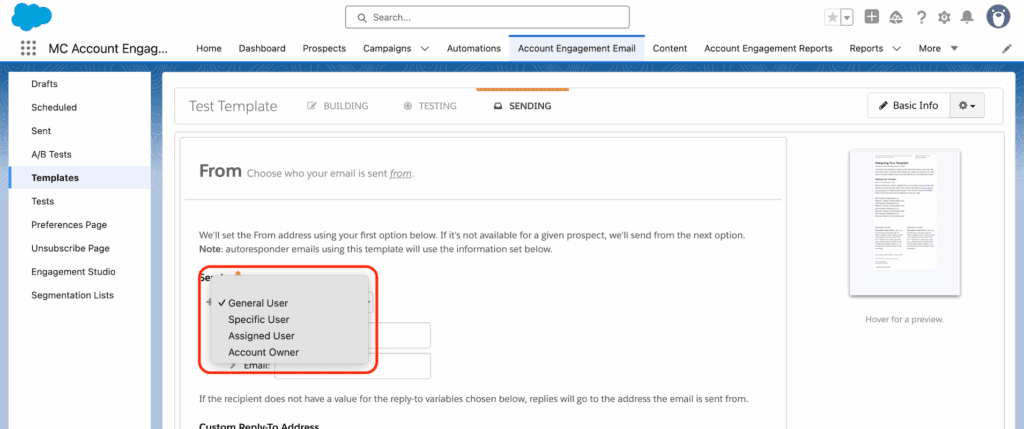
Pardot supports multiple sender address options:
- General User: Manually entered text
- Specified User: Pardot user selected per message
- Dynamic: Based on CRM owner fields on the prospect record
Pardot Form and Landing Page Settings
The touch points where prospects submit data are critical for gathering appropriate permissions and building transparency. Here’s how to ensure your forms and landing pages are fully compliant.
19. Privacy Policy Link
Include a link to your privacy policy wherever data is collected. This assures prospects their information is protected and processed respectfully.
20. Explicit Consent Checkbox
Add an opt-in checkbox and accompanying language under the form content. Users must actively agree to receive marketing communication.
21. Custom Layout Templates
Use layout templates to standardize compliance language, include mandatory links, and style your forms consistently with brand guidelines.
22. Terms of Use Access
Terms of Use detail how users can interact with your services and website. Include a link to these documents where applicable – especially on registration or download forms.
23. Thank You Pages with Next Steps
After form submission, redirect prospects to a tailored thank-you page. Use this opportunity to confirm data receipt and clarify next steps.
Conclusion
Deliverability and compliance aren’t just technical checkboxes – you’re dealing with people’s trust and legal responsibilities. Pardot provides a framework to meet regulatory demands and build better engagement, but it’s up to your team to configure and maintain the right settings.
Involve your legal team, IT department, and sales organization early to set the foundation – and keep refining based on evolving regulations and engagement trends. And if you’d like expert guidance, we’re here to help. Get in touch with our team to ensure your Pardot instance stays compliant and optimized.